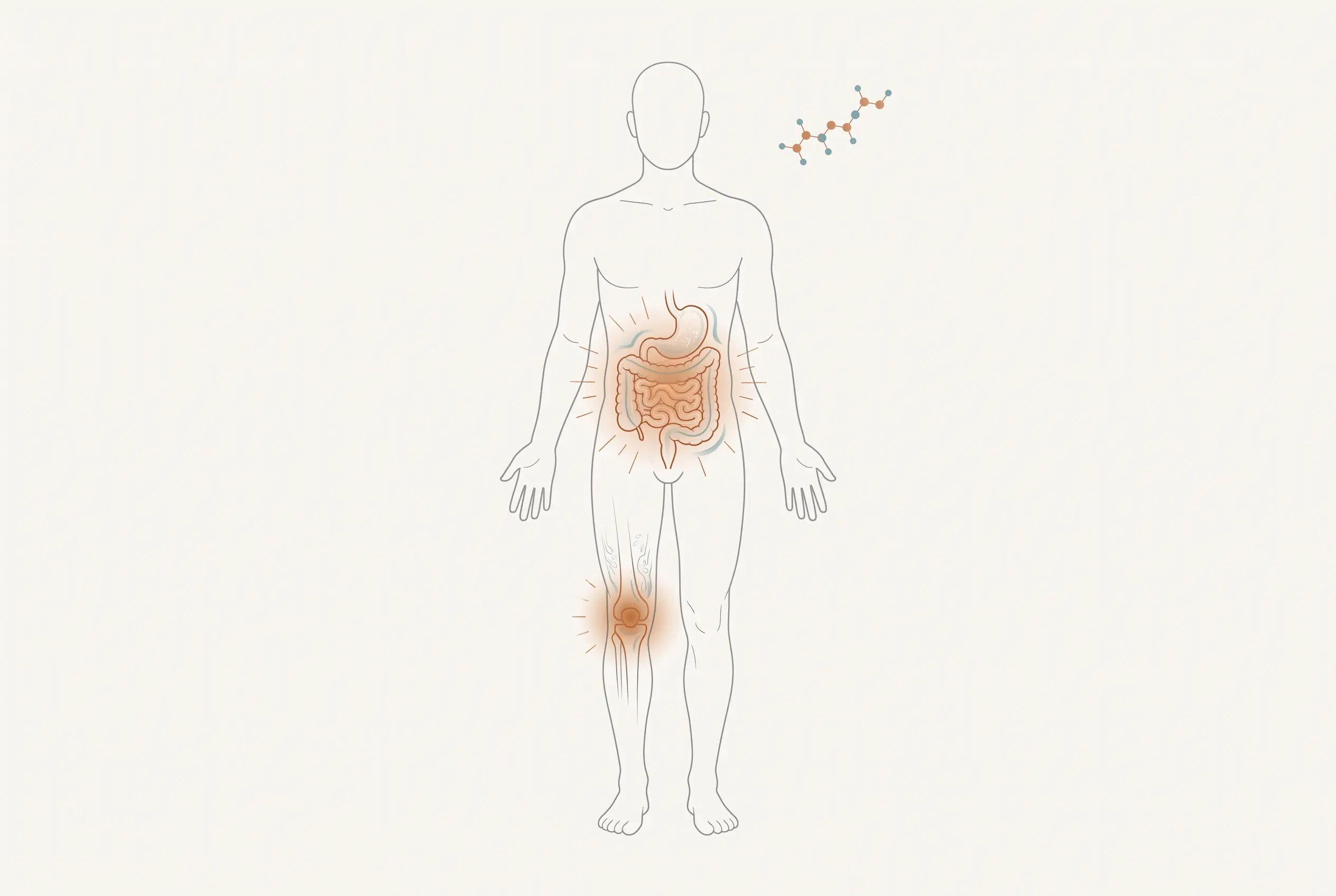
LL-37 is unusual because it isn't a foreign chemical — it's something your own body already makes. That makes it genuinely interesting to scientists. But 'the body makes it' does not mean 'it's safe to buy and inject.' Here's the honest picture: a natural defense peptide with real science behind it, but no approval and unclear safety as a product.
What LL-37 actually is
LL-37 is a human peptide — a short chain of 37 amino acids (the tiny building blocks that make up protein). It's the active piece of a larger protein called cathelicidin. Your body produces it in skin and immune cells as part of its built-in defense system. Because it helps fight germs directly, it's called an antimicrobial or host-defense peptide.
What it's studied for
In research, LL-37 has been looked at for:
- Killing or slowing bacteria, fungi, and some viruses
- Helping wounds close and heal
- Playing a role in how the immune system responds
It's a real part of how humans stay healthy. The problem starts when people treat that natural role as proof that injecting extra LL-37 is safe or helpful.
What the evidence really shows
Most of what we know comes from lab dishes, animal studies, and research on the body's own LL-37 — not from proper trials of LL-37 as a medicine you take. So while the science on natural LL-37 is solid, using it as a bought product is largely untested. LL-37 also has a two-sided nature: at the wrong levels it's been linked to inflammation and some diseases, so more is not automatically better.
What the research points to
- A real, natural role in fighting microbes and helping wounds
- Genuine scientific interest as a host-defense peptide
- Early, unproven promise for infection and wound healing
What it does NOT prove
- That injecting or applying bought LL-37 is safe in humans
- That 'more LL-37' is better — it can also cause inflammation
- That it's an approved or legal medical treatment
Who talks about it — and why to be careful
LL-37 shows up in biohacking and anti-infection circles, sometimes sold with big claims about beating stubborn infections. Those claims run far ahead of the evidence for LL-37 as a product. Real infections need a qualified doctor, not a self-bought peptide — especially one that can cut both ways in the body.
What this does not mean
- This does not mean LL-37 is proven safe or effective as a bought treatment — most evidence is lab, animal, or about the body's own version.
- This does not mean 'natural' equals safe; LL-37 can also drive inflammation and isn't quality-checked when sold online.
- This is general education, not medical advice or a recommendation to use LL-37.